Grafted
But the Lord’s portion was his people; his allotted share was Jacob. He found them in a wilderness, a wasteland of howling desert. He shielded them, cared for them, guarded them as the apple of his eye. (Deuteronomy 32:9-10)
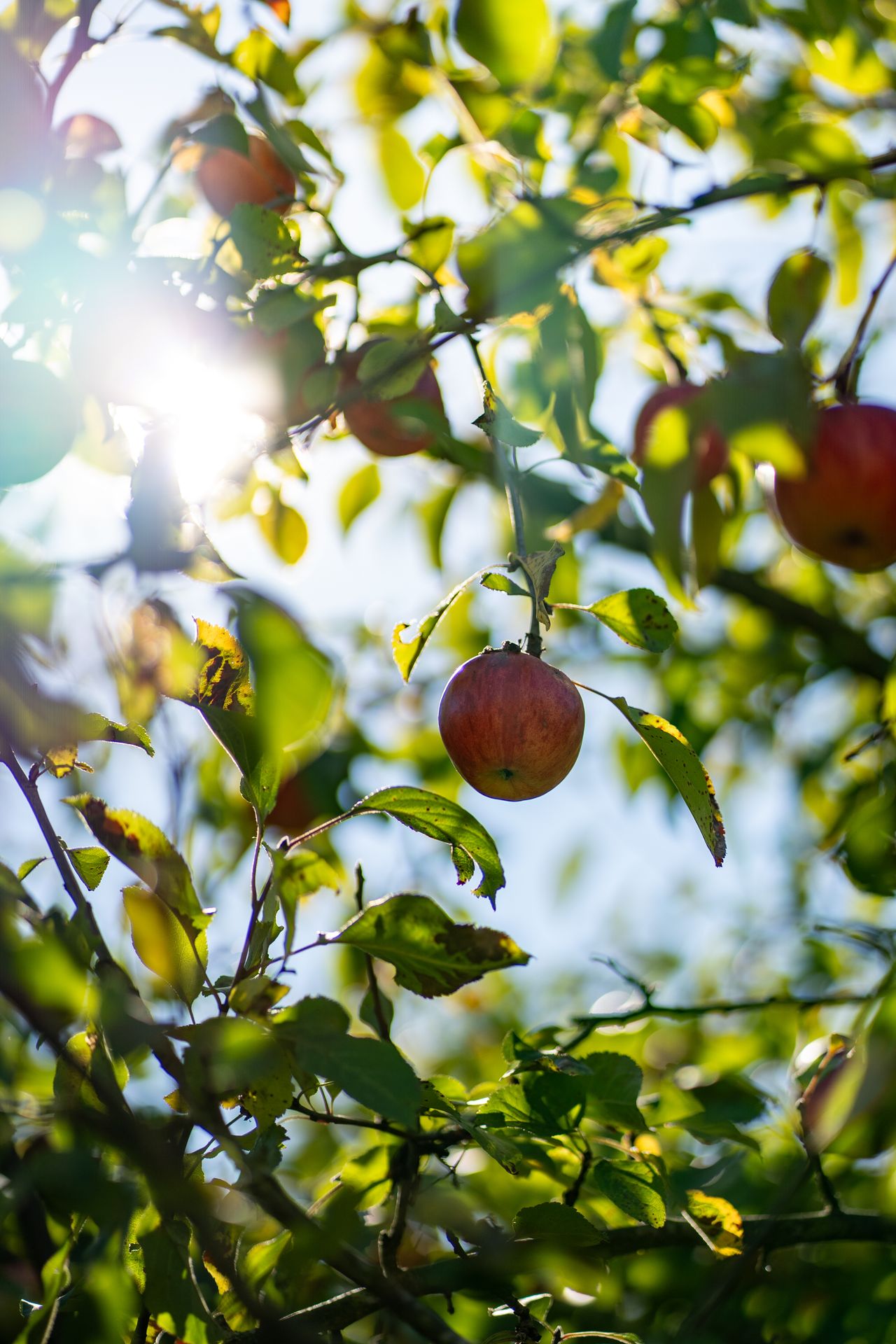
Washington state is known for its apples. In addition to those trees naturally given to us by God, humans have cultivated and created hybrids resulting in hundreds of species of apples. When variations of an apple are grafted onto a trunk of an apple tree, the varied apple blossoms enrich each other through cross-pollination. This also eliminates the need to have other apple trees nearby for pollination. That tree will produce each type of apple, separated in accord to their stalk. Despite having multiple types of apples with varied sizes, colors, tastes, and other qualities, it remains one tree, a certain type of tree: an apple tree. In one sense, the more varieties of apples grafted together, the more universally that tree represents ‘apples’ altogether.
So too the gentile nations that were grafted onto the original Jewish Catholic Church established by Jesus in the Jewish synagogues. In His time and for the early Church thereafter, the Jewish diaspora was where most Jews lived—it is estimated over 5 million Jews lived outside of Palestine . In the decades preceding Jesus’ birth, the “Hellenistic Sadducees” (those in the Greek diaspora) included “most of the priestly aristocracy” (Orchards Commentary, p. 98, para 70C). One eighth of the Egyptian population was Jewish (Orchards, p. 102, para 75a). And Antioch was considered the “center of Hellenistic Judaism” prior to becoming the “cradle of Christianity”.
The Jewish presence outside of Palestine was notable. In the 3rd century BC, Ptolemy II, king of Egypt, had established a library that he endeavored to be best in the world. He desired to include the sacred texts of the Jewish people and convened 72 Jewish experts to translate the five books of Moses (the Torah or Pentateuch). This is known as the Septuagint, and is the oldest cannon of scripture of Ancient Judaism. It was declared by the Jewish authorities to be a perfect translation of the original Hebrew. Thereafter, the scribes also translated most of the other sacred writings used by the Jews. Most Jews in the diaspora had lost their Hebrew language and only knew Greek. Therefore, by the first century, the Septuagint was in use by most Jews including Jesus and the Apostles.
“The Jews in Antioch, as everywhere else in the Diaspora, made many converts, so that Christianity gained foothold there quickly. A Christian congregation, composed of Jews and Gentiles, was early organized (Acts, xi. 19), and the name “Christian” first came into use in this city (Acts, xi. 26). There was also a synagogue in Antiochia Pisidæ (Acts, xiii. 14).” (Jewish Encyclopedia)
Originally the followers of Jesus were referred to as “the Way” for Jesus is the way, the truth, and the life (John 14:6), and these were the Jews who converted to living His Way. As further evidence of Jesus’ original Church existing both in and outside of Jerusalem, we see in Acts 9:2 that, prior to his conversion, Saul (now Paul) was prepared to arrest any members of the Way he found in Damascus and bring them back to Jerusalem. After being given the name Christian in Antioch (the center of Hellenistic Judaism; Acts 11:26), the Jews in Ephesus who rejected Jesus’ gospel still referred to Jesus’ followers as the Way (Acts 19:9). ‘Christian’ and ‘the Way’ were synonymous terms referring to the same people. According to the Ignatius Study Bible, “the Way” was a “code name for the early Christian movement … It was similarly used by the Qumran community that wrote the Dead Sea scrolls” (Acts 9:2 notes, p. 1950). “The Way” is a phrase that ties the Exodus story to the prophesy of Isaiah that a new Messiah would bring “a new Exodus by leading his people along a new ‘way’ from sin to salvation…The Early Christians adopted this title to lay claim to the promises of Isaiah and to assert their identity as the newly redeemed people of God”.
“There is neither Jew nor Gentile in the sense that all are spiritually equal in Christ.” (Gideon Lazar)
It is important to note that Paul (and others) in the diaspora were still preaching in the Jewish synagogues attempting to convert Jews to Jesus, who is the fulfillment of their faith. Contrary to the errant teachings of modern Messianic Jews and other Jewish groups who accept Jesus as their Messiah, Jesus did not create two churches: one Jew and one Gentile. This error teaches that the Way was and is the church for the Jews, and the Christian church was established for the gentiles to which some Jews also happened to join. We can see from the above that the modern Jews themselves teach the Christian church in Antioch was both Jewish and Gentile. The disciples originally preached in the synagogues there and continued to do so after gentiles joined. The Jerusalem Jews (members of The Way) who went to Antioch to preach first only spoke to Jews. But those among them who were Hellenistic Jews (from Cyprus and Cyrene), spoke Greek (Acts 11:19-20) (St. John Chrysostom and Haydock) and so could preach to all, Jews and Gentiles alike. Theodore of Mopsuestia taught those in Antioch were called Christians “for the manifestation of the law [e.g. God’s grace Acts 11:23] then in force, and that they renouncing all others chose to cleave to Christ only.” The name Christian was intended to distinctly identify followers of Jesus (both Jew and Gentile) from other Jews. In Haydock’s Catholic Commentary, we find that before being called Christians, “they were called the disciples of Jesus, and sometimes Nazarenes, (see Acts xxiv. 5.) or perhaps Galileans. This honourable name of Christians distinguished them from Gentiles and Jews, and from all heretical sects”. In other words, the name Christian was the universal name for followers of Jesus taught by the Apostles regardless of race or heritage, not only to distinguish them from non-believing Jews but also the numerous pagan and heretical sects. The name ‘Christian’ identified Jesus’ people.
Shortly thereafter, Christians began to refer to themselves also as Catholics (as evidenced in the Apostles Creed) as their Church is the one universal Church. Because in the first century and thereafter, heretical groups were often named after their principle heretic (e.g. followers of Arius were Arians), Christians took on “Catholic” as their “surname”. “Christian is my name and Catholic is my surname” St. Pacianus taught. In 380 A.D., emperor Theodosius wrote that the Christians refer to themselves as Catholic because their patriarch Peter first brought Christianity to Rome.
One is not a Jew outwardly. True circumcision is not outward, in the flesh. Rather, one is a Jew inwardly, and circumcision is of the heart, in the spirit, not the letter. (Romans 2:28-29)
In Acts 11:1-18, God taught Peter (and through Peter the disciples), that the non-Jews were to receive full membership in the Church equal to the Jews without needing to be circumcised or follow their 613 regulations (mitzvot). The Church in Antioch saw themselves as one with the Jerusalem Church for, when told of a prophecy of famine to come, they sent provisions to their brethren there (Acts 11:27-30). In Romans 9:6-8, St. Paul is very clear that “For not all who are descended from Israel belong to Israel, and not all are children of Abraham because they are his descendants”. The children of God as promised to Abraham are not those of physical biological heritage but, rather, “the children of the promise are reckoned as descendants”. Israel is now those who share the faith of Abraham which pointed to the prophesied Messiah to come, Jesus. If they truly had the faith in their heart, they would know Jesus was the long-awaited Messiah.
In Romans 11:11-24, St. Paul explains that our Church began with those Jews born under the old covenant. Some have fallen away from the tree, while Gentiles have been grafted onto the tree. If the Jews who first rejected Jesus later come to believe, they too will be grafted in. Note then that Jews and Gentiles alike are grafted into the one Church, and the tree is now Jesus Christ not any one race of people. St. Paul continues by exhorting “a hardening has come upon part of Israel, until the full number of the Gentiles come in, and so all Israel will be saved (11:25-26). “All of Israel” includes the Gentiles. We who believe are the new Israel. “Indeed, the Church believes that by His cross Christ, Our Peace, reconciled Jews and Gentiles. making both one in Himself” (Paul VI, Nostra Aetate, para 4).
The Jewish Catholics and non-Jewish Catholics together are the one Church created by Jesus Himself. Jesus did not start one Church of Jews alone (The Way) and thereafter inspire His apostles to start a separate Church for gentiles (The Christian Church). This is the error of Messianic Judaism which, through sensational social media, has captured the intrigue of many Catholics. Messianic Judaism was started in the early 1800’s by Lewis Way, Evangelical wing of the Church of England, to convert Jews to Christianity in fulfillment of biblical prophecies of the return of Jesus.
Just like the hybrid apple tree with all its grafts remains one apple tree, so too the Holy Catholic Church. Ad Majorem Dei Gloriam 😊
(Image by Butwhosamy from Pexels)
Thank you for caring and sharing appropriately...
Consecrated to the Sacred Heart of Jesus through the Immaculate Heart of Mary. Except where noted, all design, writing and images ©2024 by Debra Black and TheFaceofGraceProject.com. All Rights Reserved. No part of this website may be reproduced, distributed or transmitted in any form or by any means, including downloading, photocopying, recording, or other electronic or mechanical methods, without the prior written permission of the publisher, except in the case of brief quotations embodied in critical reviews and certain other noncommercial uses permitted by copyright law. For permission or to report violations please email: thefaceofgraceproject@gmail.com